Boiler Repair in Woodside, Queens
Methodical diagnostic troubleshooting, mechanical valve restoration, and safety control repairs for steam and hydronic heating plants across Woodside, Sunnyside, and Jackson Heights.
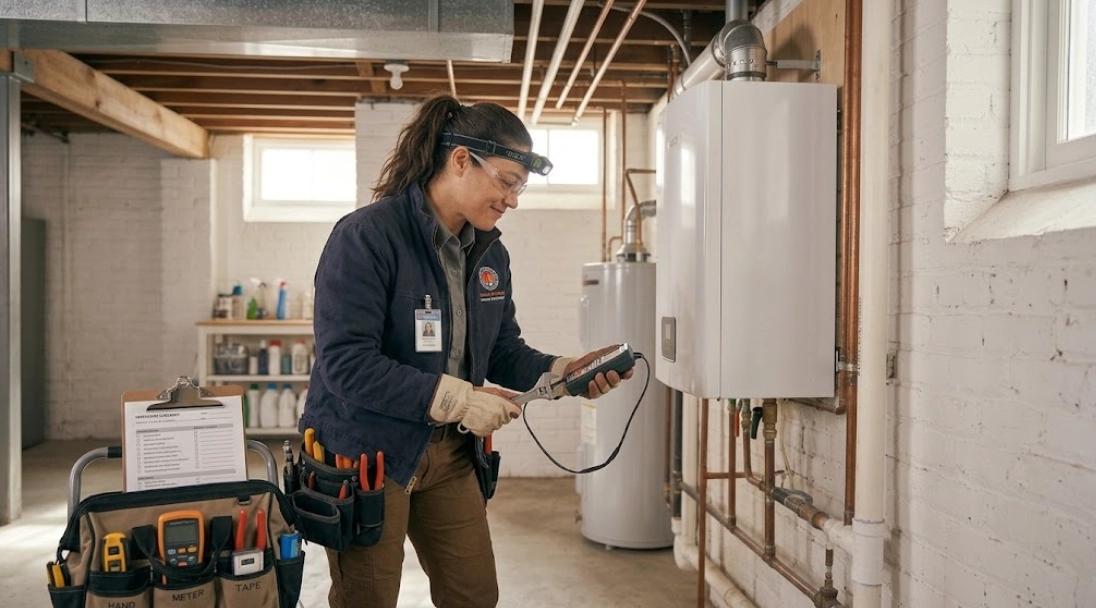
Precision Boiler Diagnostics for Woodside Residential & Multi-Family Properties
Woodside, Queens is a vibrant, densely built neighborhood characterized by an architectural mix of attached brick row houses, historic brownstones, two- to six-family multi-dwelling properties, and pre-war apartment buildings clustered near Roosevelt Avenue, Queens Boulevard, and the bustling Woodside LIRR transit hub. During the harsh winter months, building occupants rely entirely on central heating boiler systems to maintain steady comfort and satisfy stringent New York City housing maintenance code requirements.
When you face an unexpected loss of heat or an erratic heating cycle, securing dependable boiler repair Woodside Queens residents can trust is paramount. Rather than recommending hasty and expensive equipment replacements, NY Plumbing approaches each heating issue with systematic mechanical and thermodynamic testing. We locate the exact root cause—whether it is a sticking low-water cutoff mechanism, a burned-out circulator relay, an aquastat sensor failure, or fuel delivery issues—to restore safe, comfortable heating.
Whether your property depends on a classic single-pipe gravity system needing steam boiler repair Woodside Queens property owners depend on, or a multi-zone hot-water setup requiring hot water boiler repair Woodside Queens specialists handle daily, our technicians provide clear, honest assessments.
Steam Boilers Versus Hydronic Hot-Water Systems
Correct diagnosis begins with understanding whether your Woodside property utilizes steam or pressurized hot water to distribute heat across rooms and apartment floors.
Steam Heating Boilers
Common in older Woodside row houses and multi-story buildings, steam boilers boil water within a cast-iron block to produce low-pressure vapor (typically 0.5 to 2.0 PSI). Steam naturally expands up through vertical risers, displacing cold air out through radiator air vents. Common failures include float chamber silt buildup, clogged pigtail siphons causing pressuretrol inaccuracy, and worn radiator valves that produce loud clanging water hammer.
Explore steam radiator services →Hydronic Hot-Water Boilers
Hydronic systems remain completely filled with water under continuous static pressure (typically 12 to 18 PSI in residential layouts). Motorized circulator pumps propel heated water through baseboard copper fin-tubes or convector loops. Frequent breakdowns involve failed circulator pump cartridges, waterlogged diaphragm expansion tanks, seized multi-zone valve motors, and air pockets that choke off upper-floor loops.
Learn about hydronic installations →Gas Burner & Combustion Controls
Modernized gas boilers require precise gas train management. When experiencing gas boiler repair Woodside Queens service calls, our technicians inspect intermittent electronic ignition modules, flame rectification rods, 24-volt gas control valves, draft diverters, and safety spill switches to guarantee clean, unhindered combustion without carbon monoxide spillage.
Review gas piping and burner safety →Warning Signs Your Woodside Heating System Demands Immediate Attention
Heating equipment rarely breaks down without issuing mechanical warning signals. Identifying these warning indicators early allows landlords and property owners along 58th Street, Woodside Avenue, and Skillman Avenue to resolve issues before enduring a complete freeze-up during severe winter cold snaps.
1. Complete No-Heat Emergencies
A sudden no heat boiler repair Woodside Queens call often results from an open safety circuit. An emergency low-water cutoff may have locked out the gas burner to protect the cast-iron core from dry firing, a high-limit aquastat may have tripped due to restricted water flow, or a blown step-down 24V control transformer may have halted communication between your wall thermostat and the ignition control board.
2. Cold Radiators Despite Continuous Firing
If the burner fires continuously but bedrooms on upper floors remain freezing, system heat distribution has stalled. On steam boilers, mineral deposits clog the miniature orifices of radiator vent valves, trapping cold air inside the iron sections. On hydronic setups, air bubbles collect at high pipe ells or a zone valve motor fails mechanically, preventing hot water from circulating past the basement ceiling.
3. Boiler Not Working Woodside Queens: Short-Cycling
When you encounter a boiler not working Woodside Queens situation where the burner fires for just sixty seconds before shutting down abruptly, the system is short-cycling. This premature shutdown can stem from an oxidized flame sensor rod, an incorrectly set pressuretrol differential, an oversized boiler firing rate, or thermal binding caused by restricted water movement.
4. Banging, Clanking, or Whistling Noises
Loud metallic hammering in steam piping indicates trapped condensate colliding violently with high-velocity steam vapor. In hot-water systems, bubbling or kettle-like whistling noises (kettling) point to heavy mineral scale insulating the bottom heat exchanger, causing localized boiling and steam pocket collapse.
5. Pressure Relief Valve Dripping or Blowing Off
If your brass ASME relief valve is weeping or releasing gallons of scalding water onto the basement floor, internal system pressure has surged beyond safe parameters (typically 30 PSI for hot water or 15 PSI for steam). This emergency valve must never be capped or plugged, as it prevents explosive boiler failure.
Why Older Woodside Buildings Complicate Heating Diagnostics
Heating equipment in Woodside operates within a distinct architectural context. Many brick row houses and small apartment buildings near Roosevelt Avenue and 61st Street date from the 1920s through the 1950s. Over the decades, these properties have experienced partial conversions—shifting from coal to heavy heating oil, and eventually to natural gas.
These structural transitions often leave legacy complications: masonry chimneys oversized for modern gas venting, uninsulated piping risers passing through drafty crawlspaces, and modified basement floor plans that disrupt the original gravity slope of steam return pipes. Furthermore, years of tiny pinhole leaks introduce constant fresh, oxygenated tap water into closed systems, accelerating internal corrosion and coating heat exchangers with calcium scale.
Our technical diagnostic approach accounts for this local structural history. We examine chimney drafting dynamics, verify combustion air ventilation in tight pre-war basements, and evaluate pipe slope before recommending mechanical repairs.
What to Expect During a Professional Boiler Service Visit
When our technician arrives at your Woodside property, you receive a disciplined, transparent diagnostic procedure grounded in technical heating codes.
Symptom & Operational Review
We interview the property owner or superintendent regarding when symptoms began, unusual sounds, recent water additions, thermostat behavior, and prior repairs.
Safety & Visual Inspection
We inspect the fuel gas shutoff cock, electrical service switches, chimney connector flue pipe, sight glass water level, and safety relief valves for leaks or scorching.
Electrical & Limit Control Testing
Using digital multimeters, we test 24V transformer circuits, low-water cutoff float switches or electronic probe conductivity, high-limit aquastats, and flame sensors.
Hydraulic & Pressure Verification
We measure system static water pressure on hydronic systems, check expansion tank air charge, verify circulator pump amperage draw, and inspect steam air vent function.
Clear Repair Options & Commissioning
We clearly explain the exact component malfunction, provide transparent repair options, complete authorized mechanical work, and observe a complete firing cycle.
Repair Versus Replacement: Honest Technical Guidance
Property owners frequently ask whether investing in boiler repairs makes financial sense or if full equipment replacement is warranted. We offer unbiased assessments based strictly on equipment age, physical integrity, and safety:
- When Repair is Appropriate: If the cast-iron or steel heat exchanger block is structurally sound with no internal water leaks, and failures are isolated to external components—such as a circulator pump, thermocouple, relief valve, gas valve, or low-water cutoff—professional mechanical repair is reliable and cost-effective.
- When Replacement is Warranted: If the cast-iron boiler block has cracked internally, water is pooling inside the combustion chamber, or the equipment has surpassed 20 to 25 years of service with escalating winter breakdowns, upgrading to a modern high-efficiency unit offers long-term reliability and fuel savings. Learn more on our boiler replacement service page.
Safe Homeowner Maintenance Practices
Property managers and homeowners in Woodside can extend heating longevity through simple preventative practices:
- Weekly Blowdowns on Steam Cutoffs: Open the low-water cutoff blowdown valve for 10 seconds weekly during the heating season to flush out sediment and verify burner cutoff.
- Keep Boiler Room Clear: Never store paint thinners, gasoline, cardboard boxes, or laundry items within three feet of the boiler or gas burner.
- Prompt Leak Attention: Never ignore dripping relief valves or valve stem packing leaks, as continuous fresh makeup water introduces oxygen that rusts the boiler interior.
Related Heating & Plumbing Services in Woodside
Your heating plant operates in close harmony with your property's gas supply, water piping, and drainage networks. Explore our specialized services:
Boiler Replacement
Engineered boiler installations, heat loss calculations, steam EDR radiator matching, and NYC DOB compliant heating modernization for Woodside homes.
Explore boiler replacement →Steam Heat & Radiator Repair
Silence banging steam pipes, eliminate water hammer, replace leaking radiator valves, and balance thermostatic air vents across older residential buildings.
View radiator services →Water Heater Repair
Restore domestic hot water with expert gas and electric water heater troubleshooting, pilot servicing, sediment flushing, and indirect tank maintenance.
Check water heater options →Gas Line Repair & Inspection
Certified fuel gas piping leak detection, pressure testing, appliance hookups, and NYC Local Law 152 periodic gas piping inspection support.
Review gas line protocols →Leak Detection
Non-invasive acoustic and thermal imaging leak detection to pinpoint hidden pipe leaks behind walls, between apartment floors, and under concrete slabs.
Learn about leak detection →Drain Cleaning
Clear stubborn kitchen grease clogs, slow bathroom drains, and main building drain blockages with heavy-duty mechanical snaking equipment.
Read drain cleaning details →Sewer Line Repair
High-definition video sewer camera inspections, root clearing, and private lateral pipe repairs connecting Woodside residences to city sewer mains.
Learn about sewer repairs →Serving Woodside, Sunnyside, Jackson Heights & Bordering Communities
NY Plumbing provides prompt heating service across western and central Queens. In addition to serving homeowners throughout Woodside near Roosevelt Avenue, 61st Street, and Queens Boulevard, our service vehicles operate regularly in neighboring communities:
- Sunnyside: Providing specialized boiler repair near Sunnyside for pre-war brick multi-family buildings and historic row houses near Queens Boulevard and Greenpoint Avenue.
- Jackson Heights: Offering responsive boiler repair near Jackson Heights for historic garden apartment co-ops and mixed-use multi-family properties.
- Maspeth & Astoria: Delivering dependable heating diagnostics and mechanical plumbing across nearby residential and commercial districts.
To confirm current service scheduling for your specific street or neighborhood, please review our comprehensive service areas directory or call our office directly.
Common Inquiries About Woodside Boiler Repair
In steam heating systems common in Woodside row houses and apartment buildings, cold radiators usually indicate stuck or air-locked radiator air vents that prevent steam from pushing out ambient room air. In hydronic hot-water systems, this symptom typically points to an air-bound piping loop, a defective zone valve actuator, or a seized circulator pump motor.
An ASME pressure relief valve discharges when internal system pressure exceeds its engineered safety rating (typically 30 PSI for hot-water boilers, or 15 PSI for steam boilers). The root cause is frequently a waterlogged expansion tank that has lost its internal air cushion, an automatic feed valve stuck in an open filling position, or internal sediment fouling the valve seat.
The low-water cutoff (LWCO) is an essential safety switch that immediately shuts off fuel to the burner if water inside the boiler falls below a critical operational threshold. Without an operating LWCO, a dry-fired boiler can suffer cracked cast-iron sections, melted heat exchangers, or catastrophic mechanical failure.
Before calling, verify that your thermostat is set above ambient room temperature on 'Heat' mode, confirm the emergency electrical service switch (often with a red cover plate) is in the 'ON' position, inspect the sight glass to confirm adequate water levels, and check if circuit breakers have tripped. If the burner has locked out, avoid pressing the reset switch more than once.
Steam boilers have a vertical glass sight tube showing the internal water level, operate at low pressure (0.5 to 2 PSI), and feature radiators with small metallic air vents that hiss as steam arrives. Hydronic systems operate completely full of water under continuous static pressure (12 to 20 PSI), have motorized circulator pumps on the piping, and utilize convectors or baseboards without steam vents.
Schedule Prompt Boiler Service in Woodside Today
Don't allow winter heating failures to compromise your home comfort or tenant safety. Call NY Plumbing today to discuss your boiler symptoms and arrange an expert on-site inspection.
Call (315) 202-8009